


29.
08
2026
Article 226 and GeM: When Will the High Court Interfere in a Government E-Procurement Dispute?
Learn when the High Court can intervene in GeM disputes involving tenders, bid disqualification, suspension, debarment, blacklisting and e-procurement.

COMMENTS:
No Comments
CATEGORIES:
BUSINESS LAW, CORPORATE LITIGATION, LEGAL ANALYSIS, OPINIONS

29.
08
2026
GeM Account Suspended or Placed Under Temporary Moratorium: What Should a Seller Do?
GeM account suspended? Understand your legal remedies, appeal rights and options to challenge a Temporary Moratorium or suspension.
COMMENTS:
No Comments
CATEGORIES:
BUSINESS LAW, CORPORATE LITIGATION, LEGAL ANALYSIS, OPINIONS
11.
06
2026
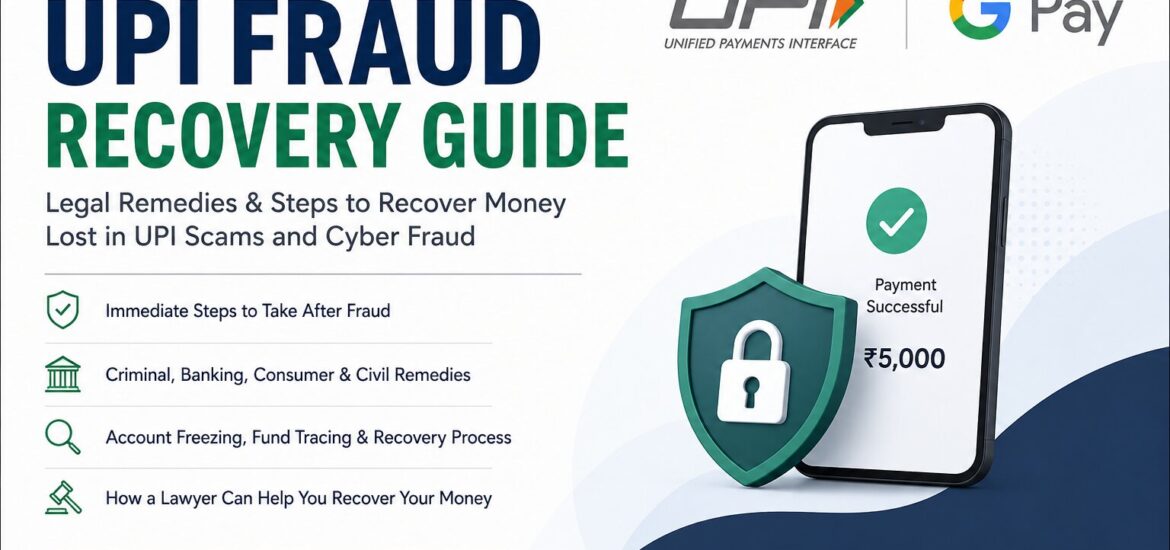
UPI Fraud Recovery in India: Complete Legal Guide to Recovering Money Lost Through Cyber Fraud
UPI fraud and online payment scams are increasing across India, but victims are not without remedies. This comprehensive guide explains the immediate steps to take after a cyber fraud, how funds can be traced and frozen, and the legal remedies…
COMMENTS:
No Comments
CATEGORIES:
CRIMINAL LAW, CYBER LAW, LEGAL ANALYSIS, OPINIONS

21.
05
2026
Cyber Bank Fraud in India: What to Do Immediately, Your Legal Rights, and How to Recover Your Money
Cyber bank fraud cases are rising rapidly across India. This detailed guide explains the immediate legal steps victims should take, RBI guidelines, bank liability, FIR procedure, cyber crime reporting, and recovery remedies available under Indian law.
COMMENTS:
No Comments
CATEGORIES:
CRIMINAL LAW, CYBER LAW, LEGAL ANALYSIS, OPINIONS

20.
05
2026
Discharge Under Section 274 BNSS: A New Defence Strategy in Section 138 NI Act Cases
Section 274 BNSS introduces a powerful new remedy of discharge in summons cases, including Section 138 NI Act cheque bounce matters. This article analyses the Punjab & Haryana High Court judgment in Dr. Manjot Singh Waraich v. Rajinderpal Singh and…
COMMENTS:
No Comments
CATEGORIES:
CORPORATE LITIGATION, CRIMINAL LAW, LEGAL ANALYSIS, OPINIONS

22.
04
2026
What to Do If Police Refuse to Register FIR: A Detailed Legal Guide
Police refusal to register an FIR is a serious violation of legal rights. Under Indian law, registration of an FIR in cognizable offences is mandatory, as affirmed by the Supreme Court. This detailed guide explains the legal remedies available, including…
COMMENTS:
No Comments
CATEGORIES:
CRIMINAL LAW, LEGAL ANALYSIS, OPINIONS